
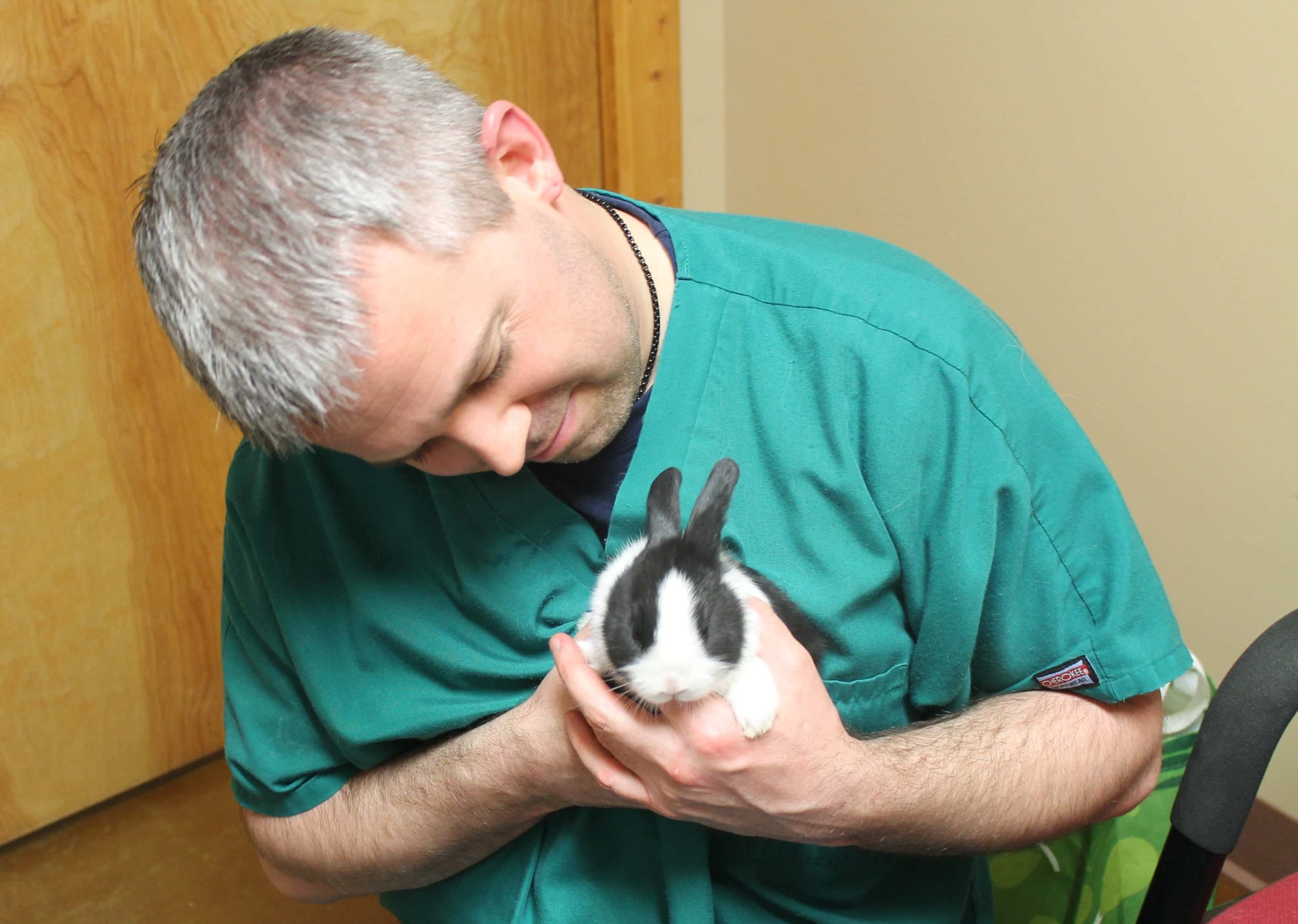
Dental Disease Treatment for Rabbits & Rodents in Lenexa, KS
Rabbits, guinea pigs, chinchillas and other rodents have teeth that never stop growing, which makes them especially prone to painful dental disease. At Mariposa Veterinary Wellness Center in Lenexa, KS, our exotics-trained veterinarians examine the teeth at every visit and provide dental trims, extractions and nutritional guidance to keep your small companion eating comfortably.
Why Rabbits and Rodents Are Prone to Dental Disease
Unlike dogs and cats, rabbits, guinea pigs and chinchillas have teeth that grow continuously throughout their lives. In the wild, a diet of tough grasses and hay wears teeth down at the same rate they grow. When pets eat too many pellets, treats or soft foods and not enough hay, teeth are not worn properly. Over time, molars develop sharp points called spurs that cut the tongue and cheeks, incisors overgrow and tooth roots elongate into the jaw. Genetics, jaw shape in certain breeds and injuries can also contribute. Rats, hamsters and other rodents have continuously growing incisors and can develop overgrowth as well.
Signs of Dental Problems
- Decreased appetite or selective eating, such as eating pellets but not hay
- Drooling or a wet chin and front legs
- Dropping food or chewing slowly
- Weight loss
- Smaller, fewer or no fecal pellets
- Overgrown or misaligned front teeth
- Watery or crusty eyes and nasal discharge
- Swelling along the jaw or face, which may indicate an abscess
A rabbit or guinea pig that stops eating for even 12 to 24 hours is at risk of a life-threatening slowdown of the digestive tract and needs prompt veterinary care.
Diagnosing Dental Disease
Every exotic pet exam at Mariposa Veterinary Wellness Center includes a thorough look at the teeth, because dental care is especially important in these species. A complete evaluation of the back molars often requires sedation or anesthesia. Digital radiographs of the skull allow us to see tooth roots, the jaw and any abscesses hidden from view.
Treatment for Rabbit and Rodent Dental Disease
Our exotic pet veterinarians tailor treatment to each pet:
- Trimming and reshaping overgrown incisors and molar spurs under anesthesia
- Extraction of severely diseased teeth through surgery
- Treatment of tooth root abscesses
- Comprehensive pain management and assisted feeding during recovery
- Laser therapy to reduce oral inflammation and support healing
- Nutritional counseling to correct the diet and support long-term dental health
Some pets with chronic dental problems need regular dental maintenance visits to keep their teeth comfortable.
Preventing Dental Disease
The best prevention is a diet based on unlimited high-quality grass hay, with leafy greens and a measured amount of quality pellets. Limit sugary treats and fruit, provide safe chew items and schedule regular wellness exams. Rabbit owners should also keep their pets current on the RHDV2 vaccine and consider spay and neuter services, which we also provide for rabbits. You can compare dental care for dogs and cats on our periodontal disease page.
Rabbit & Rodent Dental Disease FAQs
Why do rabbit teeth keep growing?
Rabbits, guinea pigs and chinchillas have teeth that grow continuously throughout life. Chewing hay and grasses wears them down naturally and keeps them the proper length.
What are signs of dental problems in rabbits?
Common signs include decreased appetite, drooling, dropping food, weight loss, smaller fecal pellets, watery eyes and swelling along the jaw.
Is it an emergency if my rabbit stops eating?
Yes. A rabbit or guinea pig that stops eating for 12 to 24 hours can develop a dangerous slowdown of the digestive tract and should be seen promptly.
How can I prevent dental disease in my rabbit?
Feed unlimited high-quality grass hay, offer leafy greens, limit pellets and sugary treats, and schedule regular exams with an exotics-experienced veterinarian.
Does my rabbit need anesthesia for a dental procedure?
Trimming molars and fully evaluating the back teeth usually requires sedation or anesthesia to be done safely and thoroughly.
Do guinea pigs and chinchillas get dental disease?
Yes. Guinea pigs and chinchillas have continuously growing teeth and are prone to many of the same dental problems as rabbits.
Keep Your Small Pet Eating Comfortably
If your rabbit, guinea pig or chinchilla is eating less or drooling, call (913) 825-3330 to schedule a visit with our exotic pet team at Mariposa Veterinary Wellness Center.